
How Vision Inspection Systems Catch Problems Before They Become Waste
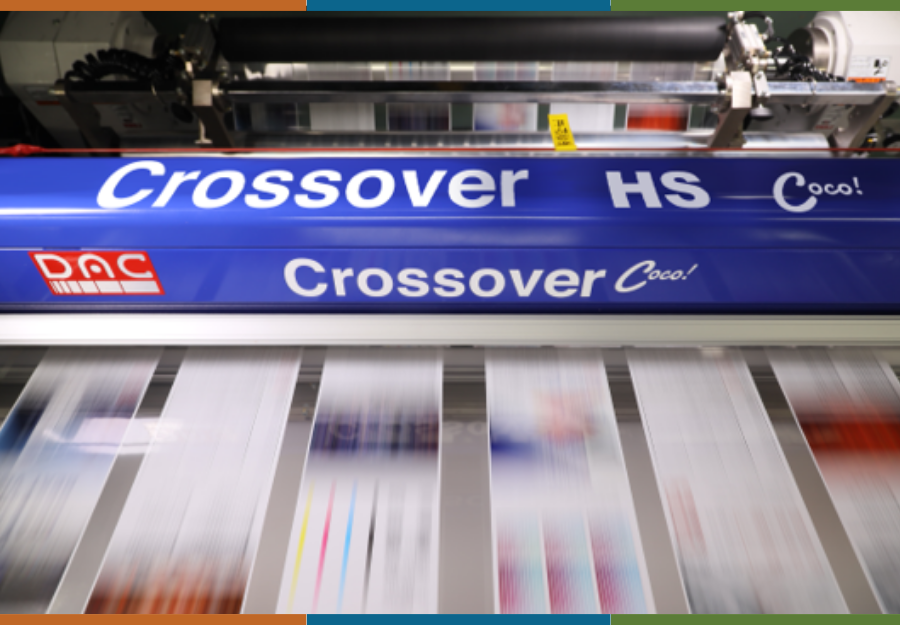
In modern converting operations, waste rarely stems from a single catastrophic failure. More often, it is the result of small issues—misregistration, contamination, material variation, sealing inconsistencies—that go unnoticed until significant material has already been produced.
By the time defects are discovered, the cost is no longer hypothetical. It is reflected in scrap, rework, downtime, and lost production confidence. The key to reducing these losses lies in detecting issues as early as possible, while corrective action can still make an impact.
The Cost of Discovering Problems Too Late
Many quality checks occur after production is complete or rely on periodic sampling. While these methods confirm whether defects exist, they offer a limited opportunity to prevent waste once it has already occurred.
Late-stage detection often leads to:
- Excessive material scrap
- Reactive line stoppages
- Increased operator intervention
- Inconsistent product quality
- Customer complaints or rejected shipments
Early-stage inspection shifts quality control closer to the source of production, reducing the volume of affected material and minimizing disruption.
Seeing the Process as It Runs
Production-integrated inspection systems provide continuous visibility into what is happening on the line during operation. Rather than relying solely on assumptions or downstream checks, operators gain real-time insight into material behavior, print quality, and process stability.
Depending on the application, inspection systems may identify:
- Print defects and color variation
- Holes, gels, contamination, or inclusions
- Registration and alignment issues
- Dimensional or sealing inconsistencies
This visibility transforms quality from a final checkpoint into an active part of the production process.
From Defect Detection to Process Awareness
The true value of inspection is not simply identifying nonconforming material—it is understanding why issues occur. When defects are detected early, operators and engineers can correlate them with process variables such as tension changes, material variability, or mechanical drift.
Over time, this insight enables:
- Faster root-cause identification
- More consistent setups between runs
- Reduced trial-and-error adjustments
- Improved operator confidence
Inspection becomes a tool for stabilizing production, not just validating output.
Reducing Waste Without Sacrificing Throughput
There is a common perception that inspection adds complexity or limits speed. In practice, effective inspection supports higher sustained output by reducing uncertainty. When quality issues are identified quickly, corrective action can be taken before large volumes are affected.
This results in:
- More predictable production
- Less unplanned downtime
- Higher effective throughput
- Lower overall cost per unit
Quality assurance and productivity work together—not in opposition.
Engineered as Part of the Production Strategy
In demanding, high-speed converting environments, inspection systems must be engineered to support real production conditions. When inspection is aligned with web handling, tension control, and downstream processes, the data becomes actionable rather than isolated.
CMD/DAC Web Inspection Solutions is considered part of the production ecosystem. Its value lies in how it complements web handling, process control, and operator decision-making to support stable, repeatable performance over the life of the equipment.
Prevent Small Issues from Becoming Big Losses
Inspection is not about eliminating every imperfection—it is about maintaining control. By identifying issues early in the production process, converters can respond decisively, limit waste, and protect both productivity and product quality.
In an environment where efficiency and consistency define competitiveness, catching problems before they become waste is a strategic advantage—not an afterthought.
Contact us for more information on CMD/DAC Web Inspection Solutions: