
Trends Come and Go. Experience Compounds. What 45+ Years in Converting Has Proven
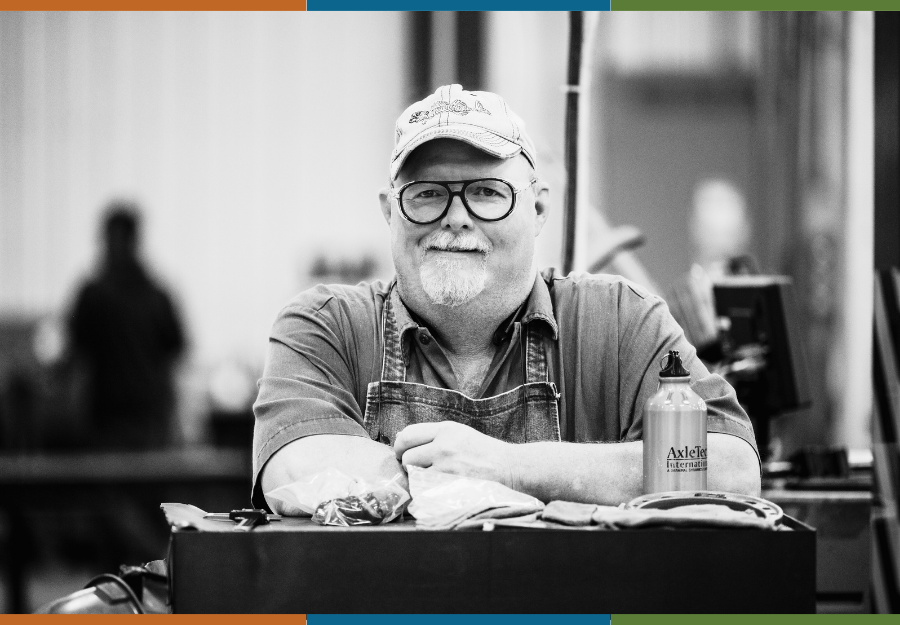
Trends Come and Go. Experience compounds.
In the converting industry, change is constant. Materials evolve. Speeds increase. Automation becomes more sophisticated. Workforce dynamics shift. What worked ten years ago may not work today—and what’s cutting-edge today may be standard tomorrow.
Yet after more than four decades in this industry, CMD Corporation has learned an important truth: while technology changes, the fundamentals of what actually works in production do not.
Materials Change. Fundamentals Don’t.
Over the years, converters have navigated countless material transitions—thinner gauges, new resin blends, multilayer structures, sustainability-driven innovations. Each advancement brings opportunity, but also complexity.
What hasn’t changed is the need for equipment that handles material consistently, predictably, and without compromise. Machines must be engineered to accommodate variation, not be disrupted by it. That reality has shaped how CMD designs converting equipment—focusing on stability, repeatability, and real-world performance rather than chasing novelty for novelty’s sake.
Speed Means Nothing Without Control
Production speeds today far exceed what was considered aggressive decades ago. But higher speed alone has never guaranteed better output.
Experience teaches that control—not raw velocity—is what sustains performance. Tension management, web handling, winding accuracy, and downstream synchronization determine whether increased speed delivers value or simply amplifies problems. CMD’s approach has always centered on balancing speed with control, ensuring productivity gains are repeatable shift after shift.
Automation Works Best When It’s Practical
Automation has transformed converting operations, but not all automation delivers equal results. Over the years, one lesson stands out clearly: automation must serve the operation, not complicate it.
CMD has seen firsthand that successful automation is designed for uptime, serviceability, and operator confidence. Systems that are intuitive to run, easy to maintain, and tightly integrated into the converting line outperform complex solutions that look impressive on paper but struggle on the plant floor.
Labor Changes Demand Smarter Design
Workforces today look very different from those of decades ago. Higher turnover, fewer experienced operators, and tighter labor markets are now the norm.
This reality reinforces the importance of designing equipment that supports people through simplified operation, clear interfaces, and training solutions that shorten the learning curve.
That is why CMD Corporation takes a lifecycle approach to customer success. CMD remains engaged well beyond installation, providing continuous support and training resources designed to meet customers where they are—today and in the future.
CMD offers a range of training options, from traditional, hands-on instruction delivered by experienced service technicians to flexible, modular learning tools that allow operators and maintenance teams to build skills over time. These training modules are designed to reinforce best practices, reduce dependence on tribal knowledge, and help new team members become productive more quickly.
As operations evolve, CMD’s ongoing support helps ensure equipment performance evolves with them—protecting uptime, strengthening operator confidence, and enabling manufacturers to adapt without disruption.
Because long-term success isn’t just about building reliable machines. It’s about supporting the people who run them, every day.
What Experience Ultimately Delivers
After more than 45 years, CMD has learned that lasting performance is not driven by trends—it’s driven by decisions made early in design, supported throughout the equipment lifecycle, and refined through continuous learning.
Being steady doesn’t mean standing still. It means evolving with purpose. CMD continues to innovate, but always grounded in what decades of production experience have proven works where it matters most: on the production floor.
Because in converting, the best solutions aren’t the loudest or the newest. They’re the ones still delivering value years down the line.
Start the conversation. Explore your options. Build confidence into your next investment.